The Permian Extinction
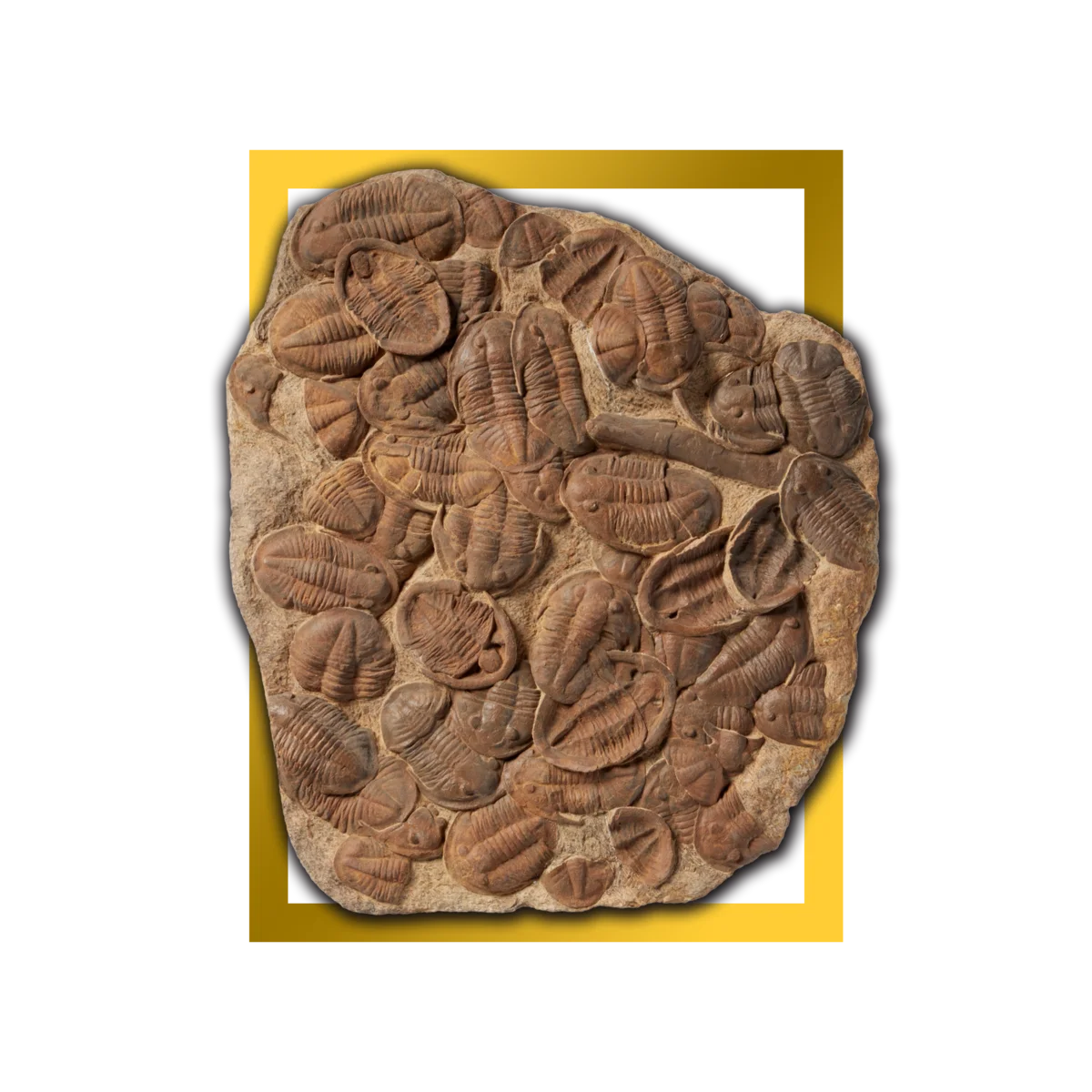
Trilobites were marine arthropods that thrived for more than 250 million years before vanishing in the end Permian mass extinction. Slabs packed with articulated trilobites record episodes where whole communities died together, likely in sudden pulses of low oxygen or toxic water that swept the sea floor. Their disappearance at about 251.9 million years ago marks one of the clearest boundaries between worlds in the fossil record.


The Permian Extinction
252 Ma — Global mortality beds
A moment frozen when an ancient sea turned deadly.
Reading a Layered Catastrophe
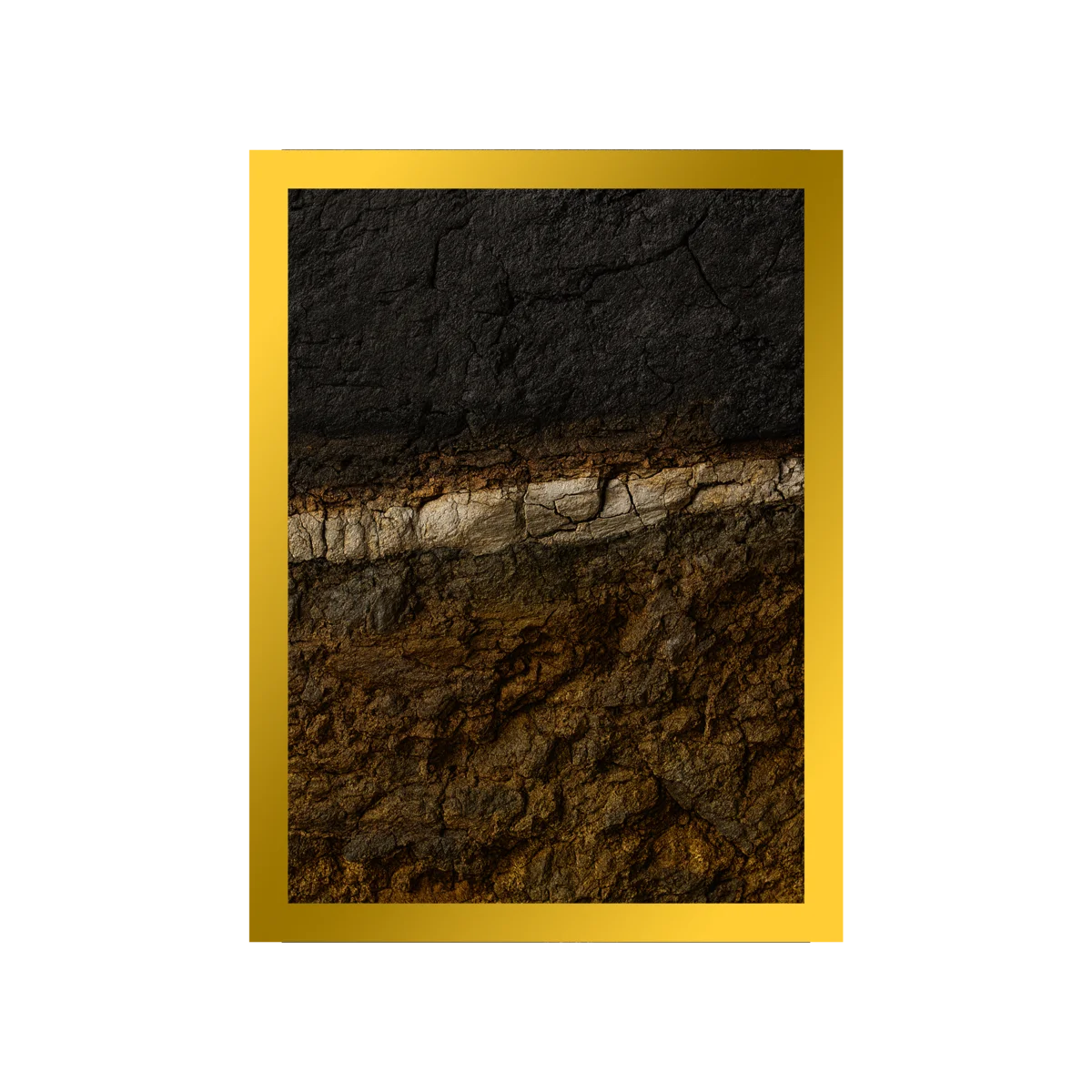
n some beds, trilobites lie stacked and oriented in the same direction, suggesting they were overwhelmed at once rather than scattered over years. Geochemists find signs of anoxia and other stress in the surrounding rock, linking these death horizons to broader environmental crises that built toward the end Permian extinction. In a single slab, it is possible to see both a local event and a chapter in a much larger planetary disruption.
The mass death beds show that extinction is not always gradual. Sometimes, entire communities can be wiped out in a single catastrophic event, leaving behind a record of the moment when the world changed.
When Success Is Not Enough
Trilobites were one of the most successful animals in Earth's history, diversifying into thousands of forms and occupying many ecological roles. Their mass death beds show that longevity and adaptability do not guarantee survival when planetary conditions move outside the range a lineage can handle. The rock becomes a quiet record of how even resilient systems can cross thresholds they cannot return from.
The extinction of trilobites shows that success is not permanent. Even the most successful and adaptable organisms can be wiped out when conditions change beyond their ability to adapt.
Extinction as a New Baseline
After trilobites vanished, their ecological spaces were eventually filled by other invertebrates that radiated into a world with different chemistry, climates, and food webs. Extinction turned one style of life into a memory and cleared room for new evolutionary experiments. In the Tree of Life, trilobites are not a side note but a long branch ending at a sharp cutoff that reshaped everything that came after.
The extinction shows that death can create space for new life. The disappearance of trilobites opened ecological niches that were filled by new forms, demonstrating that extinction is part of the ongoing process of evolution.
Echoes of Extinction
As we gaze upon the fossilized remains of trilobites, we are reminded of the fragile nature of existence. These ancient creatures, once masters of their domain, now serve as silent witnesses to the relentless passage of time. Their mass extinction, a poignant reminder of the impermanence that shadows all life, echoes through the corridors of history, urging us to reflect on our own place within the vast tapestry of the natural world. In the quiet solitude of the archive, we find a melancholic beauty in the stories these stones tell, a testament to the enduring power of memory and the inexorable march of evolution.